
One - stop services
Spanning from electronic DESIGN to the SALE of electronic components.
Menu
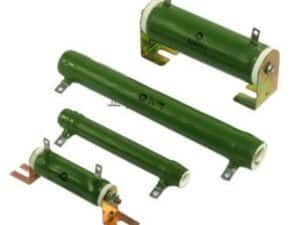
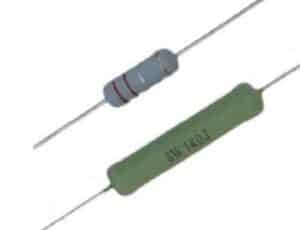
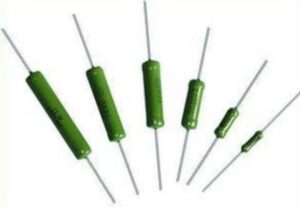
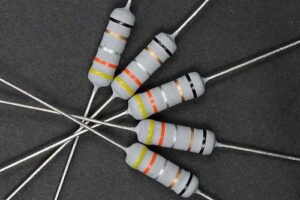
Wire-wound Resistor
Wire-wound resistors are made by winding constantan wire or manganin wire on an insulating frame.
They have many advantages: high temperature resistance, high precision, and high power rating. However, they have poor frequency modulation characteristics, mainly due to their relatively large distributed inductance.
They are widely used in low-frequency precision instruments.
They have many advantages: high temperature resistance, high precision, and high power rating.
They are widely used in low-frequency precision instruments.
Wire-wound resistors are made by winding nichrome wire, manganin wire or constantan wire on a ceramic tube, and are available in fixed and adjustable types.
Features of wire-wound resistors: extremely high resistance accuracy, low noise during operation, stability and reliability, and high temperature tolerance — they can still work normally at an ambient temperature of 170℃. However, they are large in size and have relatively low resistance values, mostly below 100KΩ. In addition, due to structural reasons, they have relatively large distributed capacitance and inductance coefficients, so they cannot be used in high-frequency circuits. Such resistors are usually used for voltage reduction or as loads in high-power circuits.