
One - stop services
Spanning from electronic DESIGN to the SALE of electronic components.
Menu
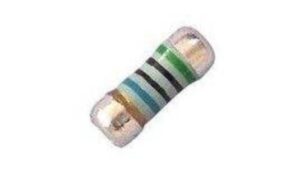
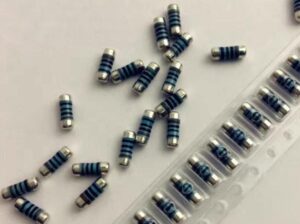

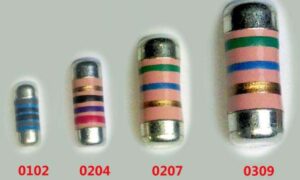
Wafer Resistor
Wafer resistors are also called leadless resistors or non-lead resistors.
The name “wafer resistor” originated in 1995, which was first named by the late Chairman Li Zhengzong of Firstohm, a resistor manufacturer. Later, the name spread in the industry and was widely used. Today, most wafer resistors on the market are applied in fields such as power supplies, communications, medical care, instruments, automobiles, lighting, industrial automation and so on.
The connection between the wafer resistor and the circuit board is to fix the resistor body on the circuit board by Surface Mount Technology (SMT). The difference from the traditional through-hole resistors with two pins is that the use of SMT machines is faster, more accurate and more efficient. Its surface mount technology is the same as that of Chip Resistors, and it has corresponding sizes in the same power range that can replace each other, thus increasing the convenience of use. Wafer resistors are obviously superior to chip resistors in mechanical or electronic characteristics, such as shock resistance, not easy to deform, heat shock resistance, and suitable for industrial use or long-term use in harsh environments.
Wafer resistors are between chip resistors and through-hole resistors, and are mainly suitable for high-end circuits with large current, high voltage impact resistance and high safety requirements. Compared with through-hole resistors, since the leads are removed, the parasitic inductance generated by the leads of through-hole resistors at high frequencies is greatly reduced, and at the same time, it can solve the problem that the precision and temperature coefficient of through-hole resistors with small resistance values cannot be improved.