
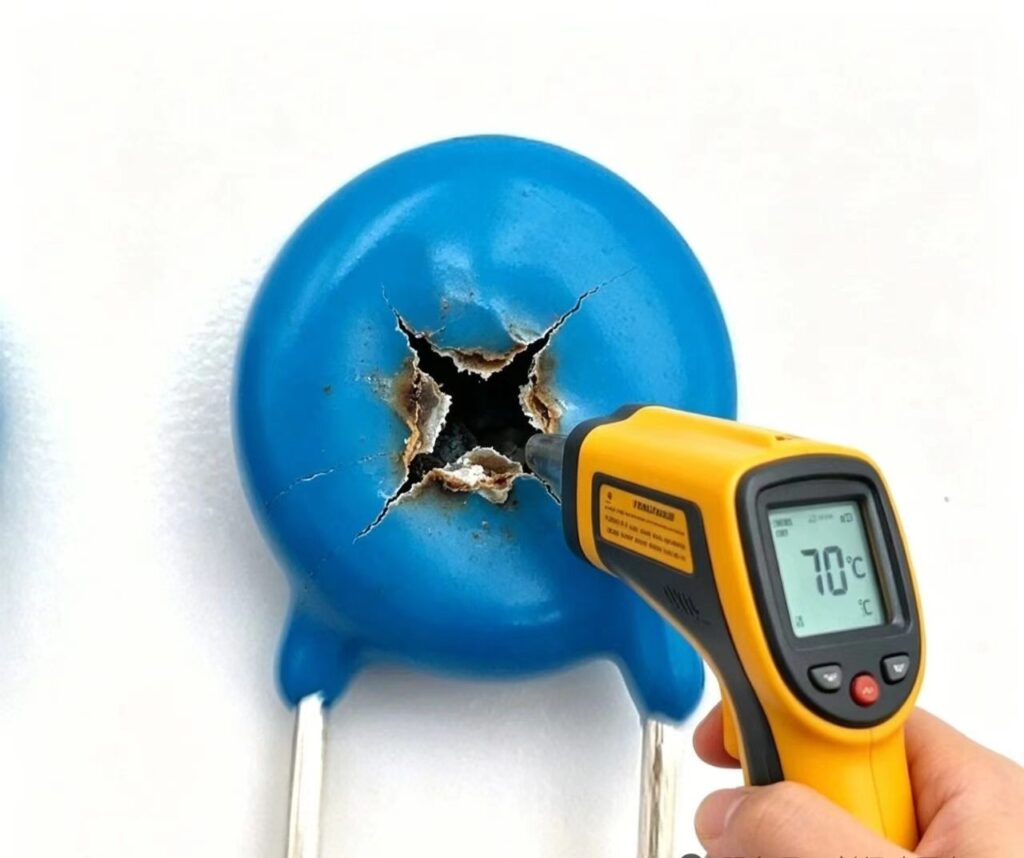
What Happens When a Varistor Fails?
From lianglite • Electronics Classroom
In electronic circuits and surge protection systems, varistors are key overvoltage protection devices. They endure repeated high-voltage stresses from lightning surges, switching overvoltages, and grid fluctuations over time. After prolonged use or exposure to extreme overvoltage, varistors may degrade or even fail completely. Different failure modes directly indicate the root cause of circuit faults.
When a varistor fails, it typically shows these distinct symptoms:
1. Short-Circuit Failure
The most common and dangerous failure mode. The device becomes fully conductive, acting like a direct wire. This can blow fuses, damage circuits, trigger circuit breakers, cause severe overheating, and even lead to smoking or fire — posing a major safety hazard.
2. Open-Circuit Failure
Internal ceramic fracture or burned leads cause the varistor to lose all protective function. With no surge protection, downstream circuits are highly vulnerable to high-voltage breakdown and damage.
3. Performance Degradation
Not fully shorted or open, but with significantly increased leakage current. Symptoms include slight component heating, higher overall power consumption, and unstable power supply operation. This condition will eventually progress to short-circuit failure over time.
4. Visible Physical Damage
Cracking, bulging, blackening, charring, or explosion marks on the surface; discolored or burned leads are all obvious signs of failure.
Easy to remember: Blackening or explosion usually means short circuit; No response at all usually means open circuit; Mild heating indicates aging.
A small component that safeguards circuit safety. With reliable quality, lianglite delivers stable protection for every device, ensuring safe and long-term operation.