
One - stop services
Spanning from electronic DESIGN to the SALE of electronic components.
Menu
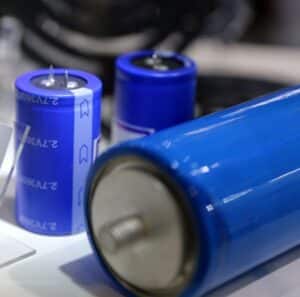
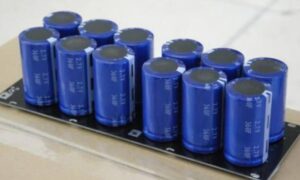
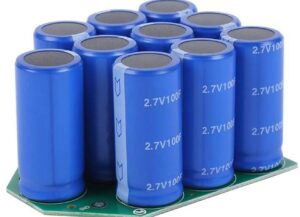
Supercapacitor
Supercapacitors, also known as electrochemical capacitors, electric double-layer capacitors, gold capacitors, and farad capacitors, are electrochemical energy-storage devices developed in the 1970s and 1980s that store energy by polarizing electrolytes. Unlike conventional chemical power sources, they are a special type of power supply with performance between traditional capacitors and batteries. They mainly store electric energy through electric double-layer capacitance and redox pseudocapacitance.
No chemical reaction occurs during energy storage, and the process is reversible, allowing supercapacitors to be charged and discharged hundreds of thousands of times repeatedly.
No chemical reaction occurs during energy storage, and the process is reversible, allowing supercapacitors to be charged and discharged hundreds of thousands of times repeatedly.
The detailed structure of supercapacitors depends on their application. Materials may vary slightly among manufacturers or for specific applications. All supercapacitors share a common structure: a positive electrode, a negative electrode, a separator between them, and electrolyte filling the pores formed by the electrodes and separator.
(1) Fast charging speed: more than 95% of rated capacity can be achieved in 10 seconds to 10 minutes. (2) Long cycle life: up to 10,000 to 500,000 deep charge-discharge cycles, with no memory effect. (3) Excellent high-current discharge capability, high energy conversion efficiency with low loss; high-current energy cycle efficiency ≥ 90%. (4) High power density: 300 W/kg to 5000 W/kg, 5 to 10 times that of batteries. (5) Environmentally friendly: no pollution in raw material production, use, storage or disposal. (6) Simple charge-discharge circuit, no dedicated charging circuit needed, high safety, maintenance-free for long-term use. (7) Excellent low-temperature performance, wide operating temperature range: -40℃ to +70℃. (8) Easy monitoring: remaining capacity can be read directly. (9) Typical capacitance range: 0.1 F to 1000 F.
Advantages
- Farad-level capacitance in a very small volume.
- No special charging or discharging control circuits required.
- Overcharge and over-discharge have little negative effect on lifespan compared to batteries.
- Green and eco-friendly energy source.
- Solderable, avoiding loose connections common in batteries.
Disadvantages
- Improper use may cause electrolyte leakage.
- Higher internal resistance than aluminum electrolytic capacitors, so not suitable for AC circuits.