
One - stop services
Spanning from electronic DESIGN to the SALE of electronic components.
Menu
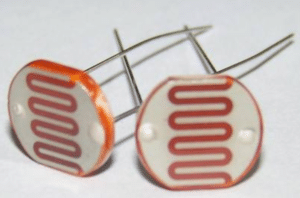
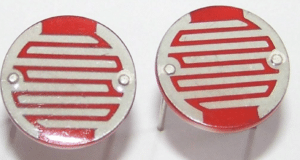
Photoresistor
A photoresistor, or photoconductor, is commonly made of cadmium sulfide (CdS), as well as other materials such as selenium (Se), aluminum sulfide (Al₂S₃), lead sulfide (PbS), and bismuth sulfide (Bi₂S₃). These materials have the characteristic that their resistance decreases rapidly when irradiated by light of a specific wavelength. This is because the carriers generated by light irradiation all participate in conduction. Under the action of an external electric field, electrons move towards the positive electrode of the power supply, and holes move towards the negative electrode of the power supply, thereby causing the resistance of the photoresistor to drop rapidly.
A photoresistor is a special resistor made of semiconductor materials such as cadmium sulfide or cadmium selenide, and its working principle is based on the internal photoelectric effect. The stronger the light irradiation, the lower the resistance. As the light intensity increases, the resistance decreases rapidly, and the bright resistance can be as low as below 1KΩ. Photoresistors are very sensitive to light. When there is no light irradiation, they are in a high-resistance state, and the dark resistance can generally reach 1.5MΩ. With the development of science and technology, the special performance of photoresistors will be widely used.
A photoresistor is a resistor whose resistance value changes with the intensity of incident light, made by utilizing the photoconductive effect of semiconductors, also known as a photoconductive detector; the stronger the incident light, the smaller the resistance, and the weaker the incident light, the larger the resistance. There is another type where the weaker the incident light, the smaller the resistance, and the stronger the incident light, the larger the resistance.
Photoresistors are generally used for light measurement, light control and photoelectric conversion (converting changes in light into changes in electricity). The commonly used photoresistor is the cadmium sulfide photoresistor, which is made of semiconductor materials. The light sensitivity (i.e., spectral characteristics) of a photoresistor is very close to the response of the human eye to visible light (0.4~0.76) μm. As long as the light is perceptible to the human eye, it will cause a change in its resistance value. When designing a light control circuit, incandescent bulb (small electric bulb) light or natural light is used as the control light source, which greatly simplifies the design.