
One - stop services
Spanning from electronic DESIGN to the SALE of electronic components.
Menu
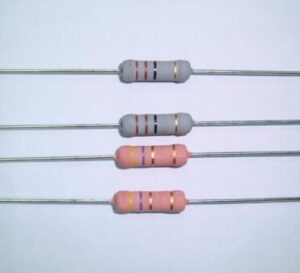
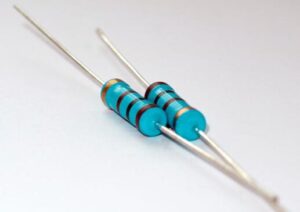
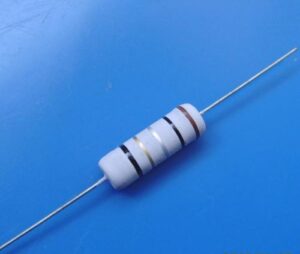
Metal Oxide Film Resistor
Metal oxide film resistors are resistors that use special metals or alloys as resistive materials, and form an oxidized resistive film on ceramic or glass substrates by means of vacuum evaporation or sputtering.
Metal film resistors are generally manufactured using the vacuum evaporation process: the alloy is heated in a vacuum, evaporates, and forms a conductive metal film on the surface of the ceramic rod. The resistance value can be controlled by cutting grooves and adjusting the thickness of the metal film. Their electrical properties such as heat resistance, noise voltage, temperature coefficient and voltage coefficient are superior to those of carbon film resistors. The manufacturing process of metal film resistors is quite flexible. Not only can the material composition and film thickness be adjusted, but the resistance can also be tuned by grooving, enabling the production of resistors with good performance and a wide resistance range.
Development Trends
- Miniaturization and high reliability;
- Discrete small-sized metal film resistors will remain widely used, but their size will be further reduced, performance improved, and prices lowered;
- In consumer electronics, carbon film resistors will still dominate, while precision resistors will be mainly metal film resistors;
- To meet the development of integrated and planar circuits, demand for chip resistors will increase significantly; general-purpose types will tend to develop thick-film resistors, while precision types will still favor metal film and metal foil resistors in the thin-film category;
- Development of integrated resistor networks.