
One - stop services
Spanning from electronic DESIGN to the SALE of electronic components.
Menu
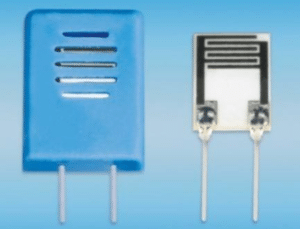
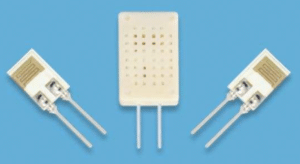
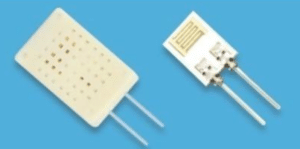
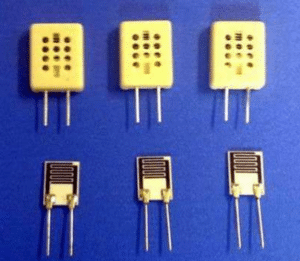
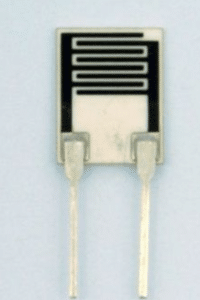
Humidity Sensitive Resistor
Humidity-sensitive resistors are made based on the principle that humidity-sensitive materials absorb moisture in the air, resulting in changes in their own resistance value. The popular humidity-sensitive resistors in industry mainly include lithium chloride humidity-sensitive resistors and organic polymer film humidity-sensitive resistors.
Humidity-sensitive resistors are made based on the principle that humidity-sensitive materials absorb moisture in the air, resulting in changes in their own resistance value.
The popular humidity-sensitive resistors in industry mainly include: 1. Semiconductor ceramic humidity-sensitive components; 2. Lithium chloride humidity-sensitive resistors; 3. Organic polymer film humidity-sensitive resistors.
The characteristic of humidity-sensitive resistors is that a film made of humidity-sensitive material is covered on the substrate. When water vapor in the air is adsorbed on the humidity-sensitive film, both the resistivity and resistance value of the component change, and humidity can be measured by using this characteristic.
Humidity-sensitive capacitors are generally made of polymer film capacitors, and the commonly used polymer materials include polystyrene, polyimide, cellulose acetate butyrate, etc. When the ambient humidity changes, the dielectric constant of the humidity-sensitive capacitor changes, causing its capacitance to change, and the capacitance change is proportional to the relative humidity.
Humidity-sensitive resistors can only use alternating current (AC); direct current (DC) will lead to failure of humidity sensitivity. This is because the electric field of DC will cause charged particles in the polymer material to deflect to the two poles, and the humidity-sensitive resistor will fail after a certain period of time. Therefore, AC must be used to maintain its dynamic balance, which is also the reason why a bridge is used to measure the resistance of a humidity-sensitive resistor instead of an ordinary multimeter.