
One - stop services
Spanning from electronic DESIGN to the SALE of electronic components.
Menu
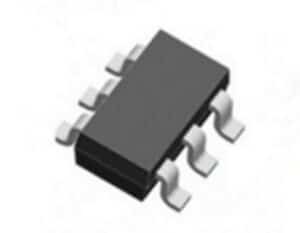
Dual Transistor
Bipolar transistor, full name bipolar junction transistor (BJT), commonly known as a triode, is an electronic device with three terminals.
It is made of three semiconductor regions with different doping levels.
Charge flow in the transistor is mainly due to the diffusion and drift motion of carriers at the PN junctions.
It is made of three semiconductor regions with different doping levels.
Charge flow in the transistor is mainly due to the diffusion and drift motion of carriers at the PN junctions.
The bipolar transistor was a revolutionary invention in the history of electronics. Its inventors William Shockley, John Bardeen and Walter Brattain were awarded the Nobel Prize in Physics in 1956.
The operation of this transistor involves the flow of two types of carriers: electrons and holes, hence it is called bipolar, and is also referred to as a bipolar carrier transistor. This operating principle differs from unipolar transistors such as field-effect transistors (FETs), whose operation involves only the drift of a single type of carrier. The boundaries between two differently doped regions are formed by PN junctions.
A bipolar transistor consists of three semiconductor parts with different doping concentrations. Charge transport in the transistor is dominated by diffusion and drift of carriers across the PN junctions. Taking an NPN transistor as an example, electrons from the heavily doped emitter region move to the base by diffusion. In the base region, holes are the majority carriers and electrons are minority carriers. Because the base region is very thin, these electrons reach the collector via drift motion, forming collector current. Thus, bipolar transistors are classified as minority carrier devices.
Bipolar transistors can amplify signals and offer good power control, high-speed operation and high durability. Therefore, they are often used to form amplifier circuits or drive devices such as speakers and motors. They are widely applied in aerospace engineering, medical equipment, robotics and other products.