
One - stop services
Spanning from electronic DESIGN to the SALE of electronic components.
Menu
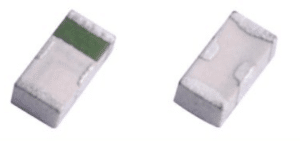
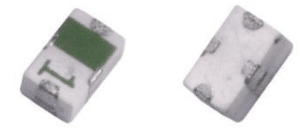
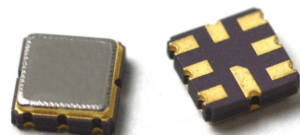
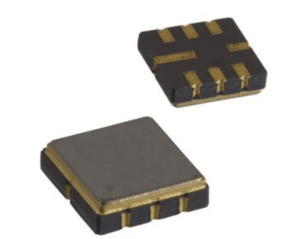
Chip Filter
A filter is a filtering circuit composed of capacitors, inductors and resistors.
A filter can effectively filter out specific frequency points or frequencies outside those points on a power line, so as to obtain a power signal of a specific frequency or eliminate a specific frequency component from the power signal.
A filter can effectively filter out specific frequency points or frequencies outside those points on a power line, so as to obtain a power signal of a specific frequency or eliminate a specific frequency component from the power signal.
A filter is a frequency-selective device that allows specific frequency components in a signal to pass through while greatly attenuating other frequency components. By using this frequency-selective characteristic of filters, interference noise can be filtered out or spectrum analysis can be performed. In other words, any device or system that allows specific frequency components in a signal to pass while greatly attenuating or suppressing other components is called a filter. A filter is a device that filters waves. “Wave” is a very broad physical concept. In the field of electronics, “wave” is narrowly defined as a process in which the value of various physical quantities fluctuates over time. Through various sensors, this process is converted into a time function of voltage or current, referred to as the time waveform of physical quantities, or simply a signal. Since the independent variable time is continuous, it is called a continuous-time signal, and is conventionally known as an analog signal.
Filtering is an important concept in signal processing. In a DC stabilized power supply, the filtering circuit minimizes the AC component in the pulsating DC voltage and retains the DC component, thereby reducing the ripple coefficient of the output voltage and smoothing the waveform.
Main Parameters
Main parameters of a filter:
Center Frequency: The passband frequency f0 of the filter, generally f0=(f1+f2)/2, where f1 and f2 are the left and right side frequency points with a relative drop of 1 dB or 3 dB for band-pass or band-stop filters. For narrow-band filters, the center frequency is often defined as the point with minimum insertion loss for passband bandwidth calculation.
Cutoff Frequency: Refers to the right passband frequency point of a low-pass filter and the left passband frequency point of a high-pass filter. It is usually defined at the 1 dB or 3 dB relative loss point. The reference for relative loss is: for low-pass filters, the insertion loss at DC; for high-pass filters, the insertion loss at a sufficiently high frequency where no parasitic stopband exists.
Passband Bandwidth: The spectrum width required to pass, expressed as BW=f2−f1. f1 and f2 are referenced to the insertion loss at the center frequency f0.
Insertion Loss: The attenuation of the original signal in the circuit caused by the introduction of the filter, characterized by the loss at the center or cutoff frequency. Full-band insertion loss requirements shall be specified if necessary.
Ripple: The peak variation of insertion loss around the mean loss curve within the 1 dB or 3 dB bandwidth (cutoff frequency) range.
Passband Ripple: The variation of insertion loss with frequency within the passband. The passband ripple within the 1 dB bandwidth is 1 dB.
Passband VSWR (Voltage Standing Wave Ratio): An important indicator measuring the quality of matched signal transmission within the filter passband. Ideal matching VSWR = 1:1; mismatching results in VSWR > 1. For a practical filter, the bandwidth satisfying VSWR < 1.5:1 is generally narrower than the 3 dB bandwidth, and its ratio to the 3 dB bandwidth depends on the filter order and insertion loss.
Return Loss: The ratio of input power to reflected power at a port, expressed in decibels (dB), also equal to 20log10ρ, where ρ is the voltage reflection coefficient. Return loss is infinite when all input power is absorbed by the port.
Stopband Attenuation: An important indicator of the filter’s selectivity. A higher value indicates better suppression of out-of-band interference. There are two common expressions: One specifies the attenuation in dB at a given out-of-band frequency fs, calculated as the attenuation at fs. The other uses the shape factor (KxdB>1) to characterize how close the amplitude-frequency response is to an ideal rectangle, where KxdB=BWxdB/BW3dB (X may be 40 dB, 30 dB, 20 dB, etc.). A higher filter order results in better rectangularity (K closer to the ideal value of 1) and greater manufacturing difficulty.
Delay (Td): The time required for a signal to pass through the filter, numerically the derivative of the transmission phase function with respect to angular frequency, i.e., Td=dϕ/dω.
In-band Phase Linearity: This indicator characterizes the phase distortion introduced by the filter to signals transmitted within the passband. Filters designed with a linear phase response function exhibit excellent phase linearity.
Classification
Filters are divided into analog filters and digital filters according to the signal type processed.
They are classified into five types based on the frequency band passed: low-pass, high-pass, band-pass, band-stop, and all-pass filters.
- Low-pass Filter: Allows low-frequency or DC components in a signal to pass while suppressing high-frequency components, interference and noise.
- High-pass Filter: Allows high-frequency components in a signal to pass while suppressing low-frequency or DC components.
- Band-pass Filter: Allows signals within a certain frequency band to pass while suppressing signals, interference and noise below or above that band.
- Band-stop Filter: Suppresses signals within a certain frequency band and allows signals outside the band to pass; also known as a notch filter.
- All-pass Filter: An all-pass filter maintains constant signal amplitude across the entire frequency band, i.e., amplitude gain is always 1.It is generally used for phase shifting, changing the phase of the input signal.In the ideal case, phase shift is proportional to frequency, equivalent to a time-delay system.