
One - stop services
Spanning from electronic DESIGN to the SALE of electronic components.
Menu
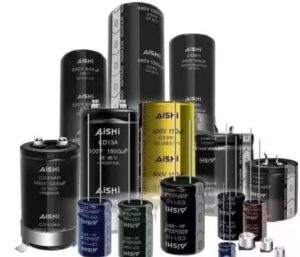
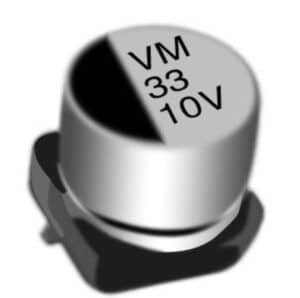
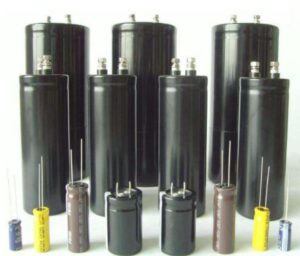
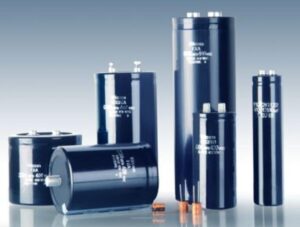
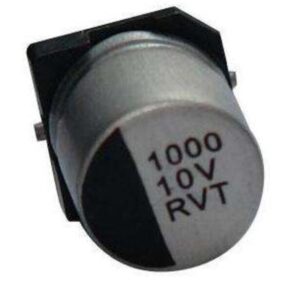
Aluminum Electrolytic Capacitor
It must be processed with DC voltage to form an oxide film on the positive plate as the dielectric.
It features large capacitance but high leakage current, poor stability, and polarity, making it suitable for power filtering or low-frequency circuits.
Polarity must not be reversed during use.
It features large capacitance but high leakage current, poor stability, and polarity, making it suitable for power filtering or low-frequency circuits.
Polarity must not be reversed during use.
Features of Electrolytic Capacitors
- Extremely high capacitance per unit volume, dozens to hundreds of times larger than other capacitor types.
- Very high rated capacitance, easily reaching tens of thousands of μF or even several farads (though not comparable to supercapacitors).
- Overwhelming cost advantage, as materials such as aluminum are common industrial materials, and production equipment is standard, enabling low-cost mass manufacturing.
Aluminum electrolytic capacitors will eventually fail; it is only a matter of time. Factors affecting lifespan include overvoltage, reverse voltage, high temperature, rapid charging/discharging, etc. Under normal conditions, temperature is the dominant factor, as higher temperatures accelerate electrolyte evaporation. Note that this refers to the internal operating temperature of the aluminum foil, not ambient or surface temperature. Manufacturers usually mark lifespan and test temperature on the capacitor body.
Capacitor lifespan is halved for every 10°C rise in operating temperature. Thus, a 2000-hour capacitor is not necessarily better than a 1000-hour one without verifying the test temperature. Each manufacturer provides temperature-lifetime formulas for design calculations.
To extend lifespan:
- Reduce operating temperature by placing capacitors away from heat sources on the PCB.
- Use capacitors with a higher maximum operating temperature (at a higher cost).
The operating voltage must not exceed the rated voltage. In filter circuits, the voltage rating should be at least 1.42 times the AC effective value. Polarity must be correctly connected. Different circuits require different capacitor types:
- Resonant circuits: mica or high-frequency ceramic capacitors
- DC blocking: paper, polyester, mica, electrolytic or ceramic capacitors
- Filtering: electrolytic capacitors
- Bypassing: polyester, paper, ceramic or electrolytic capacitors
Capacitors should be inspected for short circuits, open circuits, and leakage before assembly, and their capacitance verified. Labels for type, capacitance, and voltage rating should be visible after installation.
Lifetime Estimation Formula
Lx=Lo×210To−Ta
- Lx = actual operating lifetime
- Lo = rated guaranteed lifetime
- To = maximum rated temperature (85°C / 105°C)
- Ta = actual ambient temperature
Example: Rating: 105°C / 1000 hrs Estimated lifetime at 65°C: Lx=1000×210105−65=16000 hrs
Load Life Requirement
After applying rated voltage at maximum temperature for the specified duration, changes must meet:
- Capacitance variation ΔCap: within ±20% of the initial value.