
One - stop services
Spanning from electronic DESIGN to the SALE of electronic components.
Menu
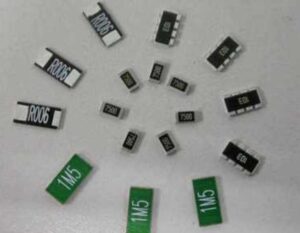

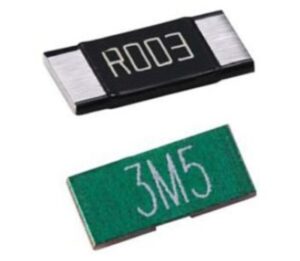
Alloy Resistor
Alloy resistors are mainly made of copper-based alloys, with different material formulations among manufacturers.
Common alloy materials on the market include: manganin, iron-chromium-aluminum, constantan, nichrome, Karma alloy, nickel-copper alloy, etc.They feature low resistance, high stability, and high power handling.
- Minimum resistance: 0.5 mΩ
- High rated power up to 4W
- Minimum TCR: ±50 ppm/℃
- Compatible with reflow soldering and wave soldering
- Suitable for current detection in power supply circuits, motor circuits, etc.
- High mechanical strength and excellent high-frequency characteristics
- Compliant with RoHS and halogen-free requirements
Alloy resistors are a type of SMD resistor, mainly used for current limiting.
They can be classified into several categories based on materials:
- Manganin alloy: high stability, mainly for resistance values below 0.004 Ω.
- Iron-chromium-aluminum alloy: good stability, mainly for 0.004 Ω and above.
- Constantan alloy: suitable for general resistance ranges.
- Nickel-copper alloy: suitable for general resistance ranges.
- Nichrome alloy: suitable for general resistance ranges.
- Karma alloy: suitable for general resistance ranges; very few manufacturers produce it due to high material cost.
- Ceramic alloy: cannot produce sizes below 0.001 Ω, but supports higher resistance up to 0.75 Ω (resistance depends on package size).
Due to the high electrical conductivity of metals, alloy resistors usually have very low resistance (e.g., 1 mΩ, 10 mΩ, 100 mΩ, etc.). They are widely used for current sampling in circuits, feeding back changing current for further control or regulation.
Main applications: battery protection boards, power supplies, inverters, lighting, motors, and more.