
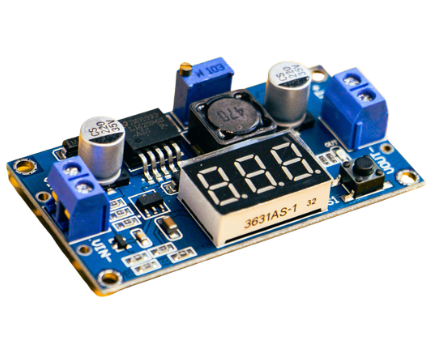
Why 24V Is the First Choice for Industrial Power? Not 12V or 48V
From lianglite • Electronics Classroom
In industrial control systems, 24V power supplies are widely adopted. It’s not that 12V or 48V are unusable, but that 24V achieves the best balance among safety, efficiency, compatibility, and cost, making it the recognized universal standard in the industry. lianglite breaks it down for you:
1. Safety Voltage: Optimal for Human Protection
24V is classified as Safety Extra-Low Voltage (SELV). Accidental contact poses no risk of fatal electric shock in both dry and humid environments, making it ideal for industrial sites with frequent human operation.
- Compared with 12V: Also safe, but requires much higher current at the same power, resulting in thicker cables, higher losses, and higher cost.
- Compared with 48V: Exceeds some safety thresholds, with higher risk of leakage in humid environments and stricter insulation requirements.
2. Balanced Transmission Efficiency and Wiring Cost
Industrial equipment often requires long-distance wiring, and 24V delivers the best trade-off between line loss and cabling cost.
From P=UI, at the same power level, the current of 24V is only half that of 12V, so line heating loss (I2R) is much lower. Thinner wires can be used, greatly reducing cabling and tray costs.
Although 48V has even lower loss, it requires higher voltage ratings for relays, sensors, contactors, and other components, increasing overall equipment cost with little advantage at medium and low power levels.
3. Universal Standard for Industrial Equipment
Through long-term industry adoption, 24V has become the general voltage standard for industrial control.
Nearly all mainstream devices — PLCs, sensors, solenoid valves, HMIs, servo drives — use 24V as their default supply. Equipment from different brands is directly compatible without extra buck-boost conversion.
- 12V: Mostly used in consumer electronics, automotive, and low-power devices; weak load capacity and cannot drive industrial actuators.
- 48V: Mainly for telecom base stations, AGVs, energy storage, high-power servos, and other long-distance / high-power scenarios, not suitable for general control loops.
4. Stronger Anti-Interference in Harsh Environments
Industrial sites have many interference sources such as inverters and welders. 24V DC avoids AC harmonic interference and provides more stable signals, preventing false triggering.
In addition, 24V has a larger voltage margin and can still work reliably with voltage drops. Even a small drop in 12V can easily cause equipment shutdown.
lianglite Summary
12V, 24V, and 48V each serve their best scenarios:
- 12V: Consumer electronics, automotive electronics, low-power low-voltage devices
- 24V: Industrial control, sensors, PLCs, solenoid valves, general industrial power
- 48V: Telecom, energy storage, AGVs, high-power long-distance power supply
24V is the all-rounder for industrial control — safe, efficient, compatible, and economical — which is why it has become the mainstream solution for industrial power systems.